
The Populism-Industrial Complex
Graham Platner will not save the Democratic Party

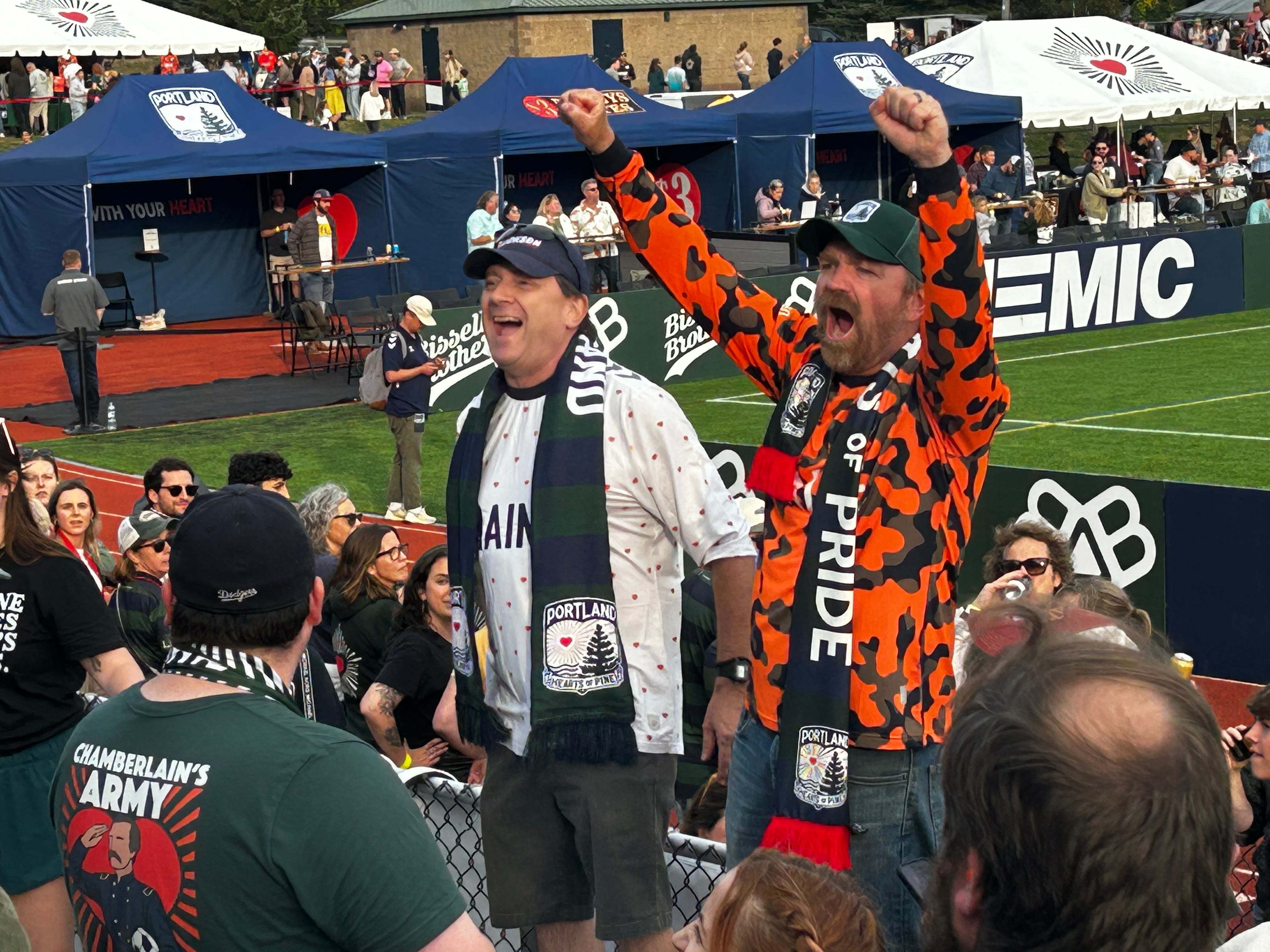

The popular music YouTuber, Rick Beato, devoted one of his recent videos to the topic of why the contemporary music industry is dominated by rich kids. He observes that most of the biggest pop stars, including Taylor Swift, Sabrina Carpenter, and Gracie Abrams, all have wealthy parents who played an instrumental role in financing their musical success. He contrasts this trend with popular American musical artists and bands of the twentieth century, most of whom came from working class backgrounds.
Beato notes that the rise of the rich kid pop star in the 2000s corresponded with the development of “manufactured music.” This music is made behind the scenes by professional songwriters and producers with little substantive involvement of the artist, whose primary function is to serve as a brand rather than a creator.
Something similar could be said of the recent upsurge in populist candidates fielded by the progressive wing of the Democratic Party. Chief among them is Maine Senate candidate Graham Platner, who won his primary election last week. The Platner campaign is the most prominent example of what I call the populism-industrial complex. The populism-industrial complex produces a manufactured politics that presents pedigreed elites as populist heroes. While it may be effective in the short-term, this is a failing long-term strategy for the Democrats.
Platner had no idea he would be a political candidate less than a year ago. In July 2025, Daniel Moraff and Leanne Fan, a progressive Democratic Party consulting couple described by Politico as “marginally Boston-based but mainly itinerant,” showed up at Platner’s home in Maine. The visit came after their first choice for a “blue-collar” candidate in the 2026 Senate election didn’t pan out. Platner, whose father has personally donated over $65,000 to Democratic Party causes since 2011, claims he had no intention of running for office. He told Moraff and Fan that their suggestion was “quite literally the weirdest thing I’ve ever heard.”
Undeterred by his initial reaction, Moraff and Fan came back several days later and cajoled Platner into running for Senate. The next month, he took to X to promote himself as a “working class Mainer” who would “topple the oligarchy.” It was an awkward stance for someone who attended one of the most elite boarding schools in the country, had his mortgage financed by his real estate attorney father, and whose grandfather was an architect for the World Trade Center. Platner got his oyster farm (which features prominently in campaign ads that seem more like music videos) from a family friend. He protested the Iraq War, but then decided to join the Marine Corps and go on four combat tours in the Middle East as a machine gunner because he wanted to “play soldier.”
“I know for a fact that, like, I’ve never been close to money, I’ve never been close to power,” Platner assures The New York Times. The trademark millennial “like” has rarely done this much work in a sentence. When pressed on his definition of the working class, Platner says that he prefers an “expansive” one that includes anyone who “works” and gets “wages,” which is “almost everybody…in the state of Maine.” Besides insulting the intelligence of everyone who has ever attempted a serious class analysis, his definition conveniently allows him to paper over his family background and to identify as working class today while being a business owner (who sells most of his oysters to his mother’s upscale restaurant).
Perhaps Platner’s story would be more relatable if it aligned with the very real phenomenon of middle class downward mobility. Many millennial Americans from middle class families, unable to buy homes or find stable employment, have been permanently plunged into the world of the working class in the wake of the 2007-08 financial crisis. Platner was shielded from this fate. He could even “play solider” in Iraq and Afghanistan knowing that, if he survived his Hemingwayesque thrill-seeking “adventure,” he would return to a “cushion” back home. Platner’s story is not middle class, let alone a working class one. It is the stuff of America’s elite.
The populist-industrial complex’s marketing of Platner as a working class hero is nothing short of remarkable. In terms of optics, he fits the bill: a burly man with a (comically) deep voice who chops wood and swings kettlebells in his campaign videos. But this kind of aestheticized politics can only go so far. It smacks of a new Democratic Party white working class identity politics just as shallow as the racial identitarianism that the Party spent the past decade promoting (and that the American people—including black and Latino voters—have roundly rejected). New identity, same playbook.
Platner’s campaign is riding high on the widespread unpopularity of Trump 2.0. Platner’s own popularity has likely increased in the wake of a series of contrived media smear campaigns directed against him. However, once the fortuitous combination of anti-incumbency energy and manufactured spectacle runs its course, Americans will have to confront the equally manufactured reality of his consultant-styled populist campaign. Pundits have compared Platner to Trump, arguing that both men have the ability to withstand and even benefit from scandals and attacks on their character. While this may be true, one key difference between the two is that Trump did not build his political brand by presenting his background as something it was not. Trump has lied about many things, but his class position is not one of them.
During his 2016 campaign, Trump openly talked about exploiting the H-1B visa system for his businesses and donating to both Republicans and Democrats to get them to do his bidding. It was his honesty about how the system works—not his background—that appealed to voters. Because Trump’s populism was not tied to his identity, it was always a political stance that could be evaluated on its own terms. This is what has enabled hitherto Trump acolytes like Tucker Carlson to reject Trump the individual in favor of the core tenets of Trumpism, which have set the terms of ideological and policy debate for the last decade of American politics. In contrast, Platner’s boilerplate progressivism wouldn’t turn any heads without the identity markers of “working class Mainer,” “oyster farmer,” and “veteran.”
Much of Platner’s platform looks good on paper, especially his opposition to “pointless wars,” but he seems to believe that the culture wars also fall into the “pointless” category. For example, in an interview from earlier this year, Platner stated that people only align with the “anti-trans movement” because billionaires “invented” a “culture war scare.” He then promptly pivots back to his economic talking points to avoid further discussion of the topic. Ruy Teixeira calls this the “‘old wine in new bottles’ problem,” where “voters hear the economic populist words but they sense that behind them is the same old Democratic Party with the same old elites and the same old cultural priorities.” Platner’s Reddit post calling rural white Americans “racist or stupid” certainly doesn’t help matters.
This is one of the biggest problems with selecting pedigreed elite candidates to serve as the new populist face of the Democratic Party: no matter how hard Bernie Sanders tries to brand figures like Platner as “candidates from the working class,” their deeply ingrained cultural elitism dies hard. While personal transformation and evolution have been a major theme of Platner’s campaign, he appears utterly unwilling to distance himself from the elite cultural politics that have gotten his Party—the Democrats—into such a deep hole with working class voters in the first place. Teixeira is correct that “Unless Democrats are willing to align with populist sentiment on cultural issues and therefore confront their own elites and associated NGOs and institutions, working-class voters will not take them seriously as populists, viewing them merely as an alternative set of elites.”
Platner’s star is still on the rise and he leads Republican incumbent, Susan Collins, in some recent polls for Maine’s 2026 Senate race.1 He may very well win against Collins—who is almost a caricature of an establishment Republican—in November. But a Platner victory in Maine could end up being pyrrhic. His electoral triumph would convince Party operatives that pedigreed elite candidates like Platner are the Democratic Party’s populist future.
The populist-industrial complex is highly effective from a marketing perspective. Graham Platner is an excellent example, but certainly not the only one. New York City mayor Zohran Mamdani—who has an even more elite pedigree than Platner—is the Party’s other populist darling. Even populists who criticize Platner for being an insufficiently woke white male, like Philadelphia Congressional nominee, Chris Rabb, boast illustrious pedigrees.
There is nothing inherently wrong with fielding elite political candidates, and it is possible for some of them to overcome their elitism. But to make pedigreed elites the face of an ostensibly working class populist movement is a losing strategy. Thanks to Donald Trump’s betrayals and broken promises, the Democrats are poised for a blue wave in November. But unless they trade out the populism-industrial complex for a real working class politics, their success will be short-lived.
In his video on the pop music industry, Beato mentions the decline of rehearsal spaces in American cities as a major reason why only rich kids make it big in music today. Their parents pay for rehearsal space, equipment, producers, and mixers while affordable rehearsal spaces for everyone else are shuttered across the country.
There is a parallel in contemporary politics. Graham Platner’s life has been a series of rehearsals: he got kicked out of one prep school and moved to another, decided to “play soldier” in Iraq and Afghanistan, and now has been handpicked by two Democratic Party political consultants to test their theory of white working class male identity politics on the American people. Meanwhile, the working class finds itself increasingly shut out of elite Democratic Party populism, denied the opportunity to practice—let alone perform—a different style of politics.
I initially stated that Platner “leads decisively” in polls, but a reader pointed out that this depends on the poll. The language has been corrected to reflect this.
“The trademark millennial ‘like’ has rarely done this much work in a sentence.” This is an excellent piece with focused, clear writing, and the paragraph this quote came from is crisp and damning. Great work.
Great stuff. Platner is 100% Brooklyn laptop class prep school kid in a Carhartt jacket. Amazing that anyone buys this dog and pony show.
One quibble: Susan Collins is hardly a "caricature of an establishment Republican." She's one of the more independent-minded senators, which is likely why she's been so long-lasting in a Maine that hasn't voted for a Republican for president since 1988. I think it's true she votes with the Republicans more often than not, but she's hardly MAGA. She voted for Trump's impeachment, and is one of the few senators who breaks the party line. I think the backlash against her is the generalized incumbent backlash, coupled with an overriding push — especially by the activist class giving us candidates like Mamdani and Platner — to get rid of anyone in the dreaded "R" category. Does anyone expect Platner to ever vote against party lines, or present a non-DSA idea, like ever?
I suspect that she's way under-polling, as she has in the past, and will win. But who the hell knows?